
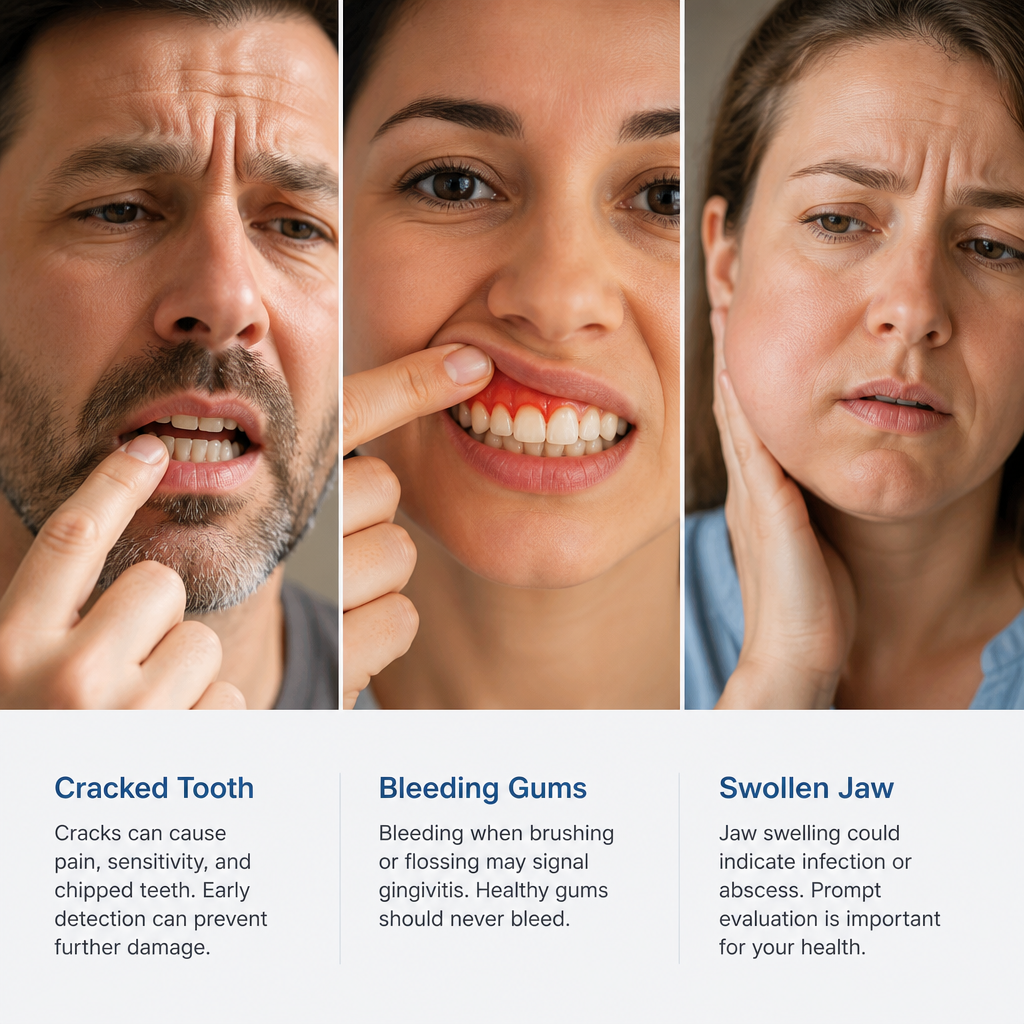
What Counts as a Dental Emergency? A Clear Guide
You are in pain, something does not feel right, and you are wondering — is this a dental emergency? Should I drop everything and see a dentist right now, or can it wait until tomorrow? Until next week?
It is a question we hear every day at Compass Dental in Darwin. And it is a perfectly reasonable one. Not every dental problem needs same-day treatment, but some situations are genuinely time-critical, and delaying care can mean the difference between saving a tooth and losing it — or, in rare cases, between a simple infection and a life-threatening one.
This guide breaks dental problems into three clear categories: true emergencies, urgent issues that need attention soon, and problems that can safely wait for a routine appointment. If you are unsure where your situation falls, call us — we are always happy to help you assess the situation over the phone.
Category 1: True Dental Emergencies — Seek Immediate Care
These situations require professional attention as soon as possible, ideally within minutes to hours. In some cases, going to the hospital emergency department may be more appropriate than waiting for a dental appointment.
Knocked-Out Permanent Tooth
A permanent tooth that has been completely knocked out of its socket is one of the most time-sensitive dental emergencies. The cells on the root surface begin to die within minutes of the tooth leaving the mouth. The best outcomes occur when the tooth is reimplanted within 30 to 60 minutes.
What to do: Pick up the tooth by the crown, rinse it gently if dirty, try to place it back in the socket, and get to a dentist immediately. If you cannot reimplant it, store it in milk or the patient’s saliva. For full first aid instructions, see our knocked-out tooth guide.
Why it is an emergency: Every minute counts. After two hours out of the socket, the chances of successful reimplantation drop significantly.
Uncontrolled Bleeding from the Mouth
If you are experiencing heavy bleeding from the gums, tongue, lips, or other soft tissue that does not slow down after 15 to 20 minutes of firm, continuous pressure with gauze, this is an emergency.
What to do: Maintain pressure, avoid rinsing or spitting (which can disturb the clot), and head to the dentist or the emergency department depending on the severity.
Why it is an emergency: Persistent bleeding may indicate a significant wound, a blood clotting issue, or bleeding from a surgical site that needs professional management.
Suspected Jaw Fracture
If you have sustained a blow to the face and experience severe jaw pain, inability to open or close your mouth properly, teeth that no longer meet together correctly, numbness, or visible deformity, you may have a fractured jaw.
What to do: Apply a cold compress, stabilise the jaw (a bandage wrapped under the chin and over the head can help), and go to the Royal Darwin Hospital emergency department. Jaw fractures typically need imaging and may require surgical intervention.
Why it is an emergency: A fractured jaw can affect the airway, cause further damage if the jaw moves, and may involve other facial injuries that need assessment.
Severe Facial Swelling with Danger Signs
Swelling from a dental infection is always worth taking seriously, but certain warning signs indicate a potentially life-threatening situation:
- Swelling that is spreading rapidly (over hours, not days)
- Swelling that is pushing the eye closed or affecting vision
- Difficulty swallowing (you cannot swallow your own saliva comfortably)
- Difficulty breathing or a feeling of the throat closing
- High fever (over 38.5 degrees Celsius)
- Feeling generally unwell, confused, or “not right”
What to do: Call 000 or go directly to the Royal Darwin Hospital emergency department. This is a medical emergency, not just a dental one.
Why it is an emergency: A dental infection can spread to the deep tissue spaces of the neck and chest. Ludwig’s angina — a severe infection of the floor of the mouth — can obstruct the airway. Sepsis (a life-threatening blood infection) is also a risk.
Severe Dental Trauma with Multiple Injuries
If a significant accident or injury has resulted in multiple broken or displaced teeth, lacerations to the face, or injuries involving the jaw, seek immediate care at the emergency department. Follow up with a dentist for the dental component once any medical emergencies have been managed.
Category 2: Urgent — See a Dentist Within 24 to 48 Hours
These situations are not immediately life-threatening, but they need professional attention soon. Delaying beyond a day or two can lead to worsening pain, infection, or permanent damage.
Severe Toothache
A persistent, throbbing toothache that is affecting your ability to eat, sleep, or concentrate is urgent. While you can manage the pain temporarily with over-the-counter medication, you need to see a dentist to address the cause — which may be deep decay, a cracked tooth, or an infection.
What to do while waiting: Take ibuprofen and/or paracetamol, rinse with warm salt water, apply a cold compress, and avoid triggers (hot, cold, sweet foods). Call Compass Dental for an urgent appointment.
Why it is urgent: Severe toothache often indicates that the nerve of the tooth is inflamed or infected. Without treatment, this can progress to an abscess.
Broken or Cracked Tooth with Pain or Exposed Nerve
A significant fracture — especially one that exposes the pink or red tissue inside the tooth (the pulp) — needs prompt attention. Even if the tooth is not visibly open but you are experiencing sharp pain when biting or sensitivity to temperature, a crack may be extending into the nerve.
What to do while waiting: Cover sharp edges with dental wax or sugar-free gum, avoid chewing on that side, and take pain relief. See your dentist within 24 hours.
Why it is urgent: An exposed or compromised nerve can become infected. A cracked tooth can also split further if you bite on it, potentially making it unsaveable.
Dental Abscess
A dental abscess — visible as a pimple-like bump on the gum, often accompanied by throbbing pain, a bad taste, and sometimes swelling — is a bacterial infection that will not resolve on its own. It needs professional treatment.
What to do while waiting: Rinse with warm salt water, take pain relief, and do not try to pop the abscess. See your dentist as soon as possible.
Why it is urgent: Untreated, an abscess can spread to surrounding tissues, the jaw, and beyond. What starts as a localised infection can become a serious medical emergency. For a detailed guide, see our article on dental abscess and infection.
Partially Dislodged (Loosened) Tooth
A tooth that has been pushed out of alignment or loosened by a blow, but is still in the socket, needs to be assessed and stabilised by a dentist within a few hours if possible.
What to do while waiting: Do not try to push the tooth back. Eat soft foods, avoid the area, and take pain relief if needed.
Why it is urgent: The blood supply to the tooth may be compromised. Prompt treatment improves the chances of the tooth surviving.
Broken Orthodontic Wire Poking into Tissue
A broken wire from braces that is digging into the cheek, tongue, or gum is painful and can cause ulceration and infection.
What to do while waiting: Try to push the wire flat against the tooth using the eraser end of a pencil or a cotton bud. Cover the sharp end with dental wax (available from pharmacies). If you cannot manage the discomfort, see your dentist or orthodontist within a day.
Category 3: Can Wait for a Routine Appointment
These problems should still be seen by a dentist, but they do not require same-day or next-day treatment. Book a routine appointment within the next week or two.
Minor Tooth Sensitivity
Brief, mild sensitivity to hot or cold drinks that passes quickly is common and usually not an emergency. It may indicate early enamel wear, a small area of gum recession, or a minor crack.
What to do: Use a sensitive toothpaste (such as Sensodyne), avoid extreme temperatures, and book a check-up to have it assessed.
Small Cosmetic Chip with No Pain
A small chip on the edge of a tooth that is not sharp, not causing pain, and not affecting your bite can wait for a routine appointment. Your dentist can smooth it or repair it with composite bonding.
What to do: If the edge is slightly sharp, you can gently smooth it with a nail file. Avoid biting on hard foods with that tooth.
Loose Orthodontic Bracket (Not Poking)
If an orthodontic bracket has come loose from the tooth but the wire is intact and nothing is poking into your soft tissue, this is not an emergency. Contact your orthodontist to schedule a repair.
Mildly Aching Gums
Gum tenderness or mild aching without swelling or bleeding is usually a sign of early gum inflammation (gingivitis). Improve your brushing and flossing technique and see your dentist at your next scheduled appointment — or book a clean if it has been a while.
Discolouration of a Single Tooth
A tooth that has gradually changed colour (turned grey or dark yellow) may indicate previous trauma or nerve death. It should be assessed, but it is not urgent unless it is accompanied by pain or swelling.
Minor Lost or Chipped Filling with No Pain
If a small piece of a filling has chipped away but the tooth is not sensitive and there are no sharp edges, you can wait a short time for a routine repair. Avoid chewing on that side and keep the area clean.
When to Go to the Hospital Emergency Department vs the Dentist
This is one of the most common points of confusion during a dental emergency. Here is the key distinction:
Go to the hospital ED if your situation involves a threat to your life or is beyond the scope of a dental practice. This includes:
- Jaw fractures or facial bone injuries
- Uncontrolled bleeding
- Severe, spreading facial swelling with difficulty breathing or swallowing
- High fever with facial swelling
- Head injuries with dental trauma
- Any situation where you feel your life may be at risk
Go to the dentist for everything else. This includes toothache, broken teeth, knocked-out teeth, lost fillings, abscesses (without spreading swelling), and soft tissue injuries that are manageable with pressure.
Here is the practical reality: The hospital ED can give you pain relief and antibiotics, but they usually cannot provide definitive dental treatment. You will likely be told to follow up with a dentist. If your problem is dental in nature and does not involve the life-threatening situations listed above, you will get faster, more appropriate treatment by coming to Compass Dental.
Still Not Sure? Call Us
If you are reading this and still are not certain whether your situation is an emergency, that is completely fine — pick up the phone and call Compass Dental. Our team will help you assess the situation, provide first aid advice over the phone, and let you know whether you need to come in urgently or can wait.
We would always rather you called and it turned out to be something minor than the other way around. There is no such thing as a silly question when it comes to your health.
Dr Thien Pham and the team at Compass Dental have been serving Darwin and the wider Northern Territory for over 10 years. We prioritise emergency patients and will make room to see you when you need us most.
Call Compass Dental now or book online.
If you are experiencing difficulty breathing, uncontrolled bleeding, or severe facial swelling, call 000 or go directly to the nearest emergency department.


