
Teeth Whitening in Darwin — Professional Options, Costs, and What Actually Works
Teeth whitening is the most popular cosmetic dental treatment in Australia, and for good reason — it is relatively affordable, non-invasive, and the results are immediate. But with so many options available (professional in-chair, take-home kits, over-the-counter strips, charcoal toothpaste, LED devices), it is hard to know what actually works and what is marketing.
Here is an honest breakdown from a dentist’s perspective.
Why Teeth Become Discoloured
Understanding why your teeth are stained helps determine which whitening method will work for you.
Extrinsic stains (surface stains):
- Coffee, tea, red wine
- Smoking or chewing tobacco
- Deeply coloured foods (berries, curry, soy sauce)
- Tartar buildup
These stains sit on the surface of the enamel and respond well to all whitening methods. A professional clean alone can make a noticeable difference.
Intrinsic stains (within the tooth):
- Natural ageing — enamel thins over time, revealing the yellowish dentine underneath
- Tetracycline antibiotics taken during childhood (grey-brown banding)
- Excessive fluoride during tooth development (fluorosis — white or brown spots)
- Trauma to a tooth (darkening from internal bleeding)
These stains are inside the tooth structure and require professional-strength whitening or, in severe cases, veneers.
Professional Whitening Options
In-Chair Whitening
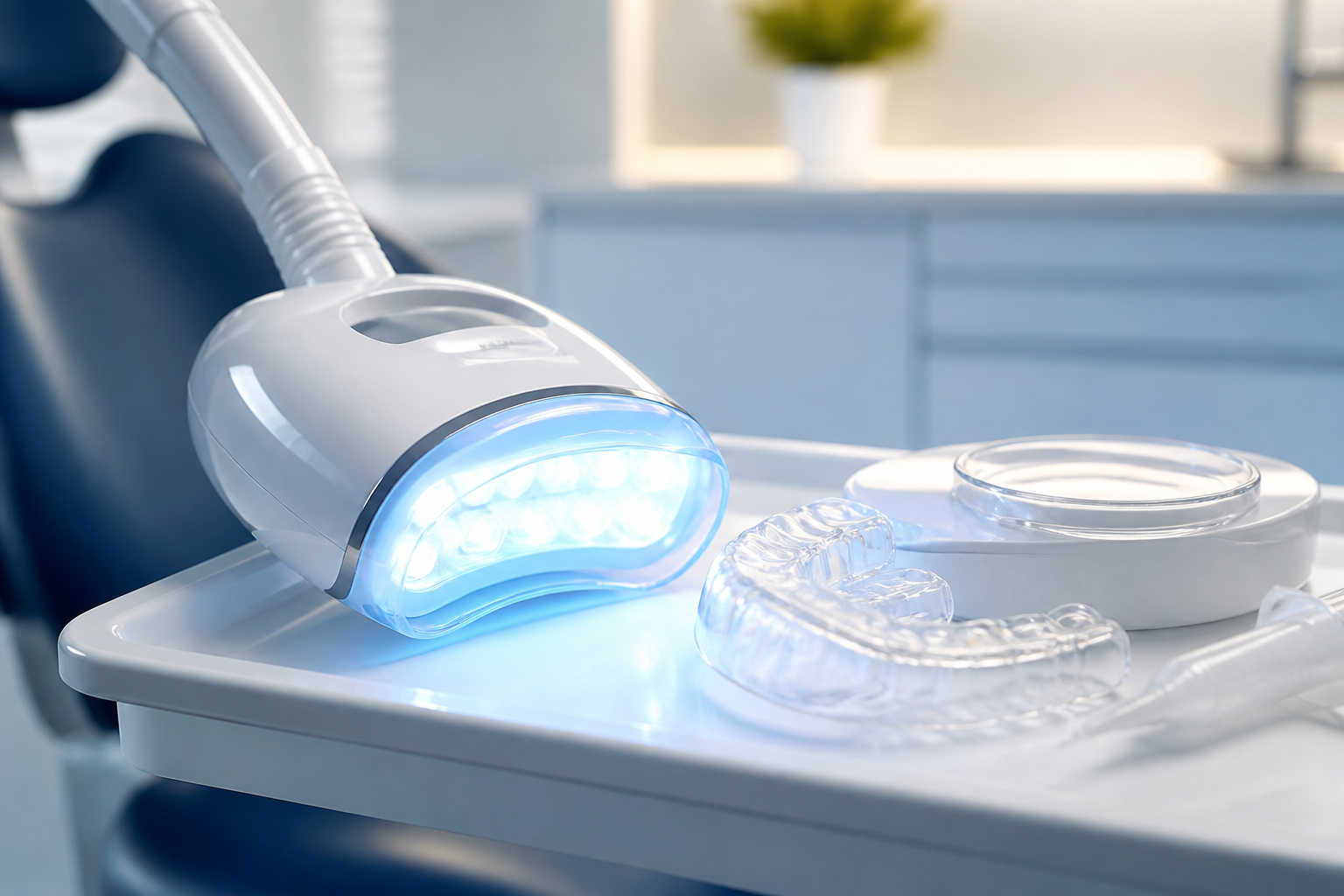
How it works: A high-concentration hydrogen peroxide gel is applied to your teeth and activated (sometimes with a light, though evidence suggests the light makes little difference — it is the gel that does the work). The procedure takes 60 to 90 minutes.
Results: Immediately visible — typically 5 to 8 shades lighter in a single session.
Cost: $500-800
Pros:
- Immediate, dramatic results
- Professionally supervised — safe and controlled
- Done in one appointment
Cons:
- Temporary sensitivity is common (usually 24 to 48 hours)
- Results fade faster than take-home whitening without maintenance
- More expensive than take-home kits
Take-Home Professional Whitening
How it works: We take impressions of your teeth and make custom-fitted trays. You fill the trays with a professional-strength whitening gel (lower concentration than in-chair but still stronger than anything over-the-counter) and wear them for 30 to 60 minutes per day for 2 to 3 weeks.
Results: Gradual — noticeable within a few days, full results after 2 to 3 weeks. Results are often longer-lasting than in-chair because the slower process allows deeper penetration.
Cost: $300-500
Pros:
- More affordable than in-chair
- Results often last longer
- Trays can be reused for touch-ups (just buy refill gel)
- Less sensitivity than in-chair
Cons:
- Takes 2 to 3 weeks for full results
- Requires daily commitment to wearing trays
- Not as immediately dramatic
Our Recommendation
For most patients, we recommend take-home whitening. The results are excellent, the cost is lower, and the custom trays give you a lifetime tool for touch-ups. If you need results for a specific event (wedding, job interview), in-chair whitening delivers immediate impact.
The best long-term approach is a combination: in-chair for initial dramatic results, then take-home trays for maintenance every 6 to 12 months.
Over-the-Counter Products — Do They Work?
Whitening Strips (e.g., Crest, Oral-B)
Verdict: Mildly effective for surface stains. The active ingredient (hydrogen peroxide or carbamide peroxide) is at a much lower concentration than professional products. They can lighten teeth by 1 to 3 shades, but results are inconsistent because the strips do not conform well to every tooth surface.
Risk: Minimal, but some people experience sensitivity. Follow the instructions — longer is not better.
Charcoal Toothpaste
Verdict: Avoid. Charcoal is abrasive and can actually damage enamel over time. Any “whitening” effect comes from physically scrubbing surface stains (which a normal toothbrush does too) rather than bleaching. The Australian Dental Association does not recommend charcoal toothpaste.
LED Whitening Kits
Verdict: The LED light itself does not whiten teeth. These kits include a peroxide gel (which does the work) and a light (which is largely marketing). The gel concentration is low, so results are modest. You are better off investing in professional take-home trays with a properly fitted tray and higher-concentration gel.
Whitening Toothpaste
Verdict: Marginally effective for surface stains. Most whitening toothpastes use mild abrasives or chemical agents to remove surface staining, but they do not actually change the colour of your tooth enamel. Fine as a maintenance product between professional treatments, but do not expect dramatic results.
How Long Does Whitening Last?
Professional whitening results typically last 1 to 3 years, depending on:
- Diet — regular coffee, tea, and red wine will re-stain faster
- Smoking — tobacco staining recurs quickly
- Oral hygiene — good brushing and regular cleans help maintain results
- Touch-ups — using take-home trays once or twice a year can keep your smile bright indefinitely
Who Should Not Whiten?
Whitening is not suitable for everyone:
- Children under 16 — the nerve of the tooth is still large and more susceptible to sensitivity
- Pregnant or breastfeeding women — as a precaution, we recommend waiting
- Teeth with untreated decay or cracks — the whitening gel can penetrate and cause pain. We fix these issues first.
- Very sensitive teeth — discuss with us first. We can often manage sensitivity with desensitising products before and after treatment.
- Crowns, veneers, and fillings — these do not change colour with whitening. If you have visible restorations, whitening your natural teeth may create a mismatch. We will discuss this at your consultation.
Frequently Asked Questions
Does teeth whitening damage enamel?
Professional whitening does not damage healthy enamel. The active ingredient (hydrogen peroxide) temporarily opens the pores of the enamel to lift stains, then the pores close again. Over-the-counter abrasive products (charcoal, baking soda) can damage enamel.
How white will my teeth get?
This depends on your starting colour, the type of staining, and your natural tooth structure. Most patients achieve 5 to 8 shades lighter with professional whitening. We will set realistic expectations at your consultation — “Hollywood white” is not achievable (or natural-looking) for most people.
Can I whiten my teeth if I have fillings?
You can whiten your natural teeth, but existing fillings, crowns, and veneers will not change colour. If you have visible restorations on your front teeth, you may need to replace them after whitening to match the new shade. We will discuss this before you commit.
Ready to brighten your smile? Book a whitening consultation to find out which option is right for you.
Call us: (08) 8995 9530 Book online →


