
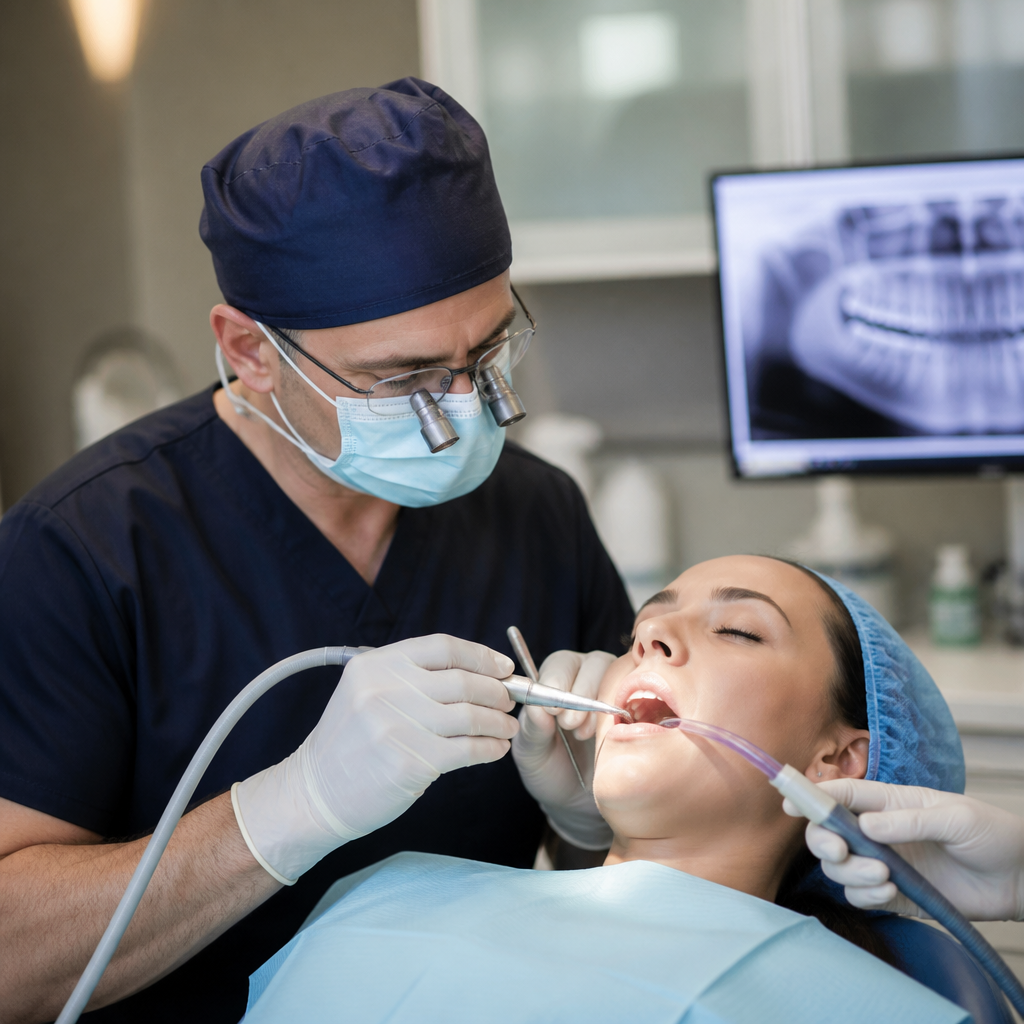
Emergency Wisdom Teeth Removal in Darwin — Fast Relief When You Need It
When Wisdom Tooth Pain Cannot Wait
A wisdom tooth emergency can strike without warning. One day you are fine; the next, you are in severe pain, your face is swollen, and you cannot eat, sleep or concentrate. When this happens, waiting weeks for a routine dental appointment is not an option — you need help now.
At Compass Dental, we understand that wisdom tooth emergencies are genuinely distressing and that timing matters. Dr Thien Pham and our team prioritise urgent cases, making room in our schedule to see emergency patients as quickly as possible. For most wisdom tooth emergencies, we aim to have the tooth out within 24 to 48 hours of your call.
This guide explains what constitutes a wisdom tooth emergency, what you can do while waiting for your appointment, what to expect when you arrive, and why prompt treatment is so important.
What Constitutes a Wisdom Tooth Emergency?
Not all wisdom tooth pain is an emergency, but certain situations require urgent attention. Here are the scenarios where you should contact us immediately — or present to emergency dental treatment without delay.
Severe, Uncontrollable Pain
If your wisdom tooth pain is intense and persistent — the kind that wakes you at night, does not respond adequately to over-the-counter painkillers, and makes it difficult to function — this is a signal that something significant is happening. Common causes include acute infection (pericoronitis or abscess), pressure on the adjacent tooth, or nerve involvement.
Pain that escalates rapidly over hours or days rather than fluctuating gently is a particular red flag.
Significant Facial Swelling
Some mild swelling around an emerging wisdom tooth is normal. However, if the swelling is pronounced — visible from the outside, distorting the shape of your face, or spreading beyond the immediate area of the tooth — this indicates a more serious infection that needs urgent treatment.
Swelling that is warm to the touch, red and firm is especially concerning, as it may indicate an abscess that is spreading.
Difficulty Swallowing or Opening Your Mouth
An infection around a lower wisdom tooth can spread to the tissues of the throat and the muscles that control jaw movement. If you are finding it difficult or painful to swallow, or if you cannot open your mouth more than a centimetre or two (a condition called trismus), this is a serious sign that requires immediate attention.
If you are having difficulty breathing due to swelling in your throat or neck, call 000 or go to your nearest hospital emergency department immediately. This is a life-threatening emergency.
Spreading Infection
Signs that an infection is spreading beyond the immediate area of the wisdom tooth include:
- Swelling extending to the neck, under the jaw, or around the eye.
- Fever and chills.
- Feeling generally unwell — fatigue, body aches, malaise.
- Swollen, tender lymph nodes in the neck.
- Pus draining from around the tooth or into your mouth.
- A foul taste in your mouth that does not go away.
A spreading dental infection can become a medical emergency if it reaches the deep spaces of the neck or the airway. This is rare, but it is why we take wisdom tooth infections seriously and prioritise getting them treated quickly.
Uncontrolled Bleeding
If you have recently had a wisdom tooth removed (or one has partially broken through) and bleeding will not stop despite applying firm pressure with gauze for 30 minutes, contact us urgently. Persistent bleeding may require additional treatment to control.
Trauma or Fracture
If a wisdom tooth has fractured — either spontaneously due to decay or as a result of biting on something hard — and you are in pain or the sharp edge is cutting your cheek or tongue, this warrants urgent attention.
First Aid While Waiting for Your Appointment
If you are experiencing a wisdom tooth emergency and your appointment is a few hours or a day away, here are steps you can take to manage the situation at home.
Pain Management
- Ibuprofen (Nurofen) — Take 400mg every 6 to 8 hours with food. Ibuprofen is particularly effective for dental pain because it reduces both pain and inflammation. Do not exceed 1,200mg in 24 hours.
- Paracetamol (Panadol) — Take 1,000mg every 6 to 8 hours. Do not exceed 4,000mg in 24 hours.
- Combining the two — Ibuprofen and paracetamol can be taken together for enhanced pain relief, as they work through different mechanisms. Alternate them every 3 to 4 hours (for example, ibuprofen at 8am, paracetamol at 11am, ibuprofen at 2pm, and so on). This is often more effective than either medication alone.
- Avoid aspirin — Aspirin can increase bleeding and is not recommended for dental pain.
Always follow the dosage instructions on the packaging and consult a pharmacist if you have any underlying health conditions or take other medications.
Reducing Swelling
- Cold compress — Apply an ice pack or a bag of frozen peas wrapped in a clean cloth to the outside of your cheek, over the swollen area. Apply for 15 to 20 minutes at a time, with at least 20 minutes off in between. This helps reduce swelling and provides some pain relief.
- Keep your head elevated — When resting or sleeping, prop yourself up with extra pillows. This helps reduce blood flow to the area and can minimise swelling.
Managing Infection
- Warm saltwater rinses — Dissolve half a teaspoon of salt in a glass of warm water and gently rinse your mouth, allowing the water to flow over the affected area. This helps reduce bacteria and can provide temporary relief. Repeat every few hours.
- Do not apply heat externally — While warm rinses inside the mouth are helpful, applying heat packs to the outside of your face can worsen swelling and encourage the spread of infection.
- Stay hydrated and nourished — Even if eating is difficult, try to drink plenty of water and consume soft, cool foods. Your body needs energy to fight the infection.
What Not to Do
- Do not try to pull the tooth yourself. This may sound obvious, but we have seen patients attempt it. You risk breaking the tooth, damaging surrounding structures, and introducing more bacteria into the area.
- Do not ignore worsening symptoms. If your condition deteriorates significantly while waiting for your appointment — particularly if you develop difficulty breathing, swallowing becomes much harder, or the swelling spreads rapidly — go to the Royal Darwin Hospital emergency department.
- Do not apply crushed aspirin or other substances directly to the gum. This can cause a chemical burn to the tissue and make things worse.
- Do not drink alcohol to manage the pain. Alcohol can increase bleeding, interact with pain medication and impair your ability to recognise worsening symptoms.
How Compass Dental Handles Wisdom Tooth Emergencies
We have structured our practice to accommodate urgent cases because we know that dental emergencies do not follow a convenient schedule.
Step 1: Your Call
When you contact Compass Dental with a wisdom tooth emergency, our team will assess the urgency of your situation over the phone. We will ask about your symptoms — pain level, swelling, fever, difficulty swallowing or breathing — to determine how quickly you need to be seen.
For genuine emergencies, we aim to see you the same day or the next day. If our schedule is full, we will make room.
Step 2: Emergency Assessment
When you arrive, Dr Pham will conduct a focused examination:
- Clinical examination — Assessing the tooth, surrounding gums, swelling, lymph nodes, jaw movement and overall condition.
- X-ray — An OPG (panoramic X-ray) or periapical X-ray to see the full picture of the tooth, its roots, its relationship to the nerve, and the extent of any infection or pathology.
- Medical history review — Checking for any conditions or medications that affect treatment planning.
Step 3: Immediate Treatment Plan
Based on the assessment, Dr Pham will explain what is happening, what needs to be done, and the plan for treatment. In most cases, the plan is straightforward: get the tooth out as soon as possible.
For acute infections: If there is significant active infection, we may start you on antibiotics to bring the infection under control before extracting the tooth. In many cases, we can begin antibiotics and schedule the extraction for the following day. In other cases — particularly where the infection is well-localised — extraction can proceed the same day, as removing the source of the infection is the most effective treatment.
For severe pain without significant infection: Extraction can usually proceed immediately or the same day.
Step 4: The Extraction
At Compass Dental, emergency wisdom teeth removal is performed using local anaesthetic combined with happy gas (nitrous oxide).
- Local anaesthetic numbs the area completely. You will not feel pain during the procedure — only pressure and movement.
- Happy gas is inhaled through a small nose mask. It does not put you to sleep, but it induces a feeling of calm relaxation and reduces anxiety. Many patients describe it as feeling pleasantly detached from the procedure. The effects wear off within minutes of removing the mask, so you can go about your day soon afterwards.
This combination is our standard approach for both routine and emergency extractions. It is effective, safe, and allows us to perform the procedure in our dental chair without the delays, costs and logistics involved in arranging hospital-based treatment.
Most emergency wisdom teeth extractions take 30 to 60 minutes, depending on the position and complexity of the tooth. You will be comfortable throughout.
Step 5: Aftercare
Before you leave, we will:
- Provide clear written and verbal aftercare instructions.
- Prescribe any necessary medications (pain relief, antibiotics if indicated).
- Schedule a follow-up appointment if needed.
- Make sure you know how to contact us if any concerns arise during your recovery.
Why You Should Not Wait
It can be tempting to put off dealing with a problematic wisdom tooth — perhaps hoping the pain will settle on its own, or waiting until a more convenient time. While minor, fleeting wisdom tooth discomfort can sometimes resolve temporarily, genuine emergencies tend to get worse, not better.
Infections Spread
A localised infection around a wisdom tooth can spread to the jaw, the floor of the mouth, the throat and the neck. In the most serious cases — known as Ludwig’s angina — the infection can compromise the airway and become life-threatening. This is rare but entirely preventable with timely treatment.
Pain Escalates
An abscessed or severely infected wisdom tooth will not get better on its own. The pain may fluctuate — sometimes easing temporarily as the abscess drains spontaneously — but it will return, often worse than before.
Damage to Adjacent Teeth
An infected wisdom tooth can damage the neighbouring second molar. If the infection or decay spreads to the adjacent tooth, you may lose that tooth as well — a far worse outcome that could have been prevented by addressing the wisdom tooth early.
Antibiotic Resistance
Repeated courses of antibiotics to manage recurring wisdom tooth infections without removing the underlying cause (the tooth) contribute to antibiotic resistance. Removing the tooth resolves the problem permanently.
Impact on Daily Life
Severe dental pain affects everything — eating, sleeping, working, concentrating, mood. The sooner the problem is treated, the sooner you can get back to your normal life.
Patients From Remote NT Communities
We understand that not everyone in the Northern Territory has easy access to dental care. If you live in Katherine, Alice Springs, Nhulunbuy, Tennant Creek or another remote community and you are experiencing a wisdom tooth emergency, we want you to know that Compass Dental is here to help.
The Challenge of Remote Access
Many remote NT communities have limited dental services — if any. Waiting for a visiting dental team or a public dental appointment can mean weeks or months of pain and recurring infections. For a wisdom tooth that is causing severe symptoms, that wait is not acceptable.
How We Help
- Phone triage — Call us and describe your symptoms. We can assess the urgency, advise on pain management while you travel, and have an appointment ready for you when you arrive in Darwin.
- Fast turnaround — We aim to see emergency patients within 24 to 48 hours. If you are travelling from a remote area, we will do our best to coordinate your consultation and extraction so you can have everything done in one trip.
- Same-day extraction where possible — For patients who have travelled long distances, we try to perform the assessment and extraction on the same day where it is clinically safe to do so. We understand that a second trip to Darwin is a significant burden.
- Clear aftercare instructions — We will provide detailed written instructions for your recovery, tailored to your situation, so you feel confident managing your healing once you return home.
- Phone support — If you develop concerns after your extraction and you are back in your home community, call us. We can often manage post-operative issues over the phone and advise you on whether you need to see a local health provider or return to Darwin.
Patient Assistance Travel Scheme (PATS)
If you need to travel to Darwin for dental treatment, you may be eligible for the NT Government’s Patient Assistance Travel Scheme (PATS), which provides subsidies for travel and accommodation costs. Eligibility criteria apply — speak to your local GP or health clinic for more information.
What to Expect During Recovery From Emergency Extraction
Recovery after an emergency wisdom tooth extraction follows the same general timeline as a planned extraction, though if there was significant infection, healing may take a little longer.
The First 24 Hours
- Some bleeding is normal. Bite gently on the gauze pad provided for 30 to 45 minutes. If bleeding persists, replace with a fresh piece of damp gauze and apply firm pressure for another 30 minutes.
- Pain and swelling will peak in the first 24 to 48 hours. Take your prescribed pain medication as directed — do not wait for the pain to become severe before taking it.
- Rest. Take the day off work or other commitments. Avoid strenuous activity.
- Eat soft, cool foods. Yoghurt, ice cream, cold soup, mashed banana.
- Do not rinse, spit or use a straw for the first 24 hours.
Days 2–7
- Begin gentle saltwater rinses from day two.
- Gradually reintroduce soft foods — scrambled eggs, mashed potato, warm soup.
- Swelling should begin to decrease from day three.
- Pain should be manageable and gradually improving. If pain worsens after day two, contact us — it may indicate dry socket or another complication.
Week 2 and Beyond
- Most patients are feeling significantly better.
- You can gradually return to your normal diet.
- The extraction site will continue to heal for several weeks, but it should not be causing significant discomfort.
For a detailed guide to eating during recovery, see our article on eating after wisdom teeth removal.
When to Go to Hospital Instead
While Compass Dental handles the vast majority of wisdom tooth emergencies, there are rare situations where you should go directly to the Royal Darwin Hospital emergency department:
- Difficulty breathing — Any swelling that is affecting your ability to breathe is a medical emergency. Call 000 immediately.
- Severe swelling of the throat or neck — Particularly if it is progressing rapidly and affecting swallowing or breathing.
- High fever with spreading infection — A temperature above 38.5 degrees Celsius combined with rapidly spreading facial swelling, confusion or feeling extremely unwell.
- Uncontrolled bleeding — If you cannot stop bleeding from the wisdom tooth area despite 30 minutes of firm pressure, and you cannot reach us by phone.
These situations are rare. In most cases, a wisdom tooth emergency is best managed in a dental practice where the tooth can be properly assessed and extracted — which is exactly what we do at Compass Dental.
The Cost of Emergency Wisdom Teeth Removal
Emergency extractions at Compass Dental are priced the same as planned extractions — we do not charge an “emergency surcharge.” The cost depends on the complexity of the extraction and whether you have health fund coverage.
If you have a health fund, bring your card and we will process your claim on the spot through HICAPS. If you do not have insurance, we can discuss payment options.
We believe that financial concerns should never prevent someone from getting urgent dental treatment. If cost is a barrier, talk to us — we will work with you to find a solution.
Frequently Asked Questions
How quickly can Compass Dental see me for a wisdom tooth emergency?
We aim to see emergency patients within 24 to 48 hours of their call. For severe cases — significant swelling, difficulty swallowing, high fever — we will do our best to see you the same day. Call us as early in the day as possible so we can fit you in.
Will I need to take time off work after an emergency extraction?
We recommend taking the rest of the day off after the extraction, and ideally the following day as well. Most patients are able to return to light duties within two to three days, though this depends on the complexity of the extraction and the nature of your work. If your job involves heavy physical labour, you may need three to five days off.
Can you remove an infected wisdom tooth, or do I need antibiotics first?
It depends on the severity of the infection. In many cases, removing the tooth is the best way to treat the infection — it removes the source. If the infection is severe or spreading, we may start you on antibiotics first to reduce the infection to a manageable level before extracting the tooth. Dr Pham will assess your specific situation and recommend the safest approach.
I’m scared of dental procedures. Can you help me stay calm during an emergency extraction?
Absolutely. We understand that an emergency situation combined with dental anxiety can be overwhelming. Our happy gas (nitrous oxide) sedation is specifically designed to help anxious patients feel calm and relaxed during procedures. It works quickly, wears off quickly, and most patients describe the experience as far more manageable than they expected. We also take the time to explain every step of the procedure so there are no surprises.
Is it safe to fly after a wisdom tooth extraction?
Generally, yes — flying after a wisdom tooth extraction is usually safe. However, if you had a tooth removed from the upper jaw and there is any concern about a connection to the sinus (an oro-antral communication), your dentist may advise waiting a few days before flying. Discuss your travel plans with Dr Pham so we can advise you accordingly — this is especially relevant for patients flying back to remote communities.
What if my wisdom tooth emergency happens on a weekend or after hours?
Call our practice number — our voicemail will provide instructions for reaching us in an after-hours emergency. If you are in severe pain or experiencing a medical emergency (difficulty breathing, uncontrolled bleeding, high fever with spreading swelling), go to the Royal Darwin Hospital emergency department.
I’ve been putting off my wisdom teeth for years and now one is causing an emergency. Will the dentist judge me?
Not at all. We see this regularly, and there is no judgement. Life gets busy, dental anxiety is real, and many people simply do not get around to addressing their wisdom teeth until they have to. Our only concern is getting you out of pain and resolving the problem safely. You are in good hands.
Can all four wisdom teeth be removed in an emergency appointment?
If all four teeth need to come out and it is clinically appropriate, we can remove all four in a single session. However, in an emergency situation, the priority is usually the tooth that is causing the acute problem. Depending on the clinical picture, we may recommend removing the symptomatic tooth urgently and scheduling the remaining teeth for a follow-up appointment. Dr Pham will discuss the best approach with you.
I live in a remote community with no dentist. What should I do if I think I have a wisdom tooth emergency?
Contact Compass Dental by phone as soon as possible. We can assess the urgency of your situation, advise on pain management and first aid, and schedule an appointment for when you can get to Darwin. If your community has a health clinic, visit them for interim pain relief and antibiotics if needed. For severe symptoms — difficulty breathing, rapid swelling of the throat, high fever — go to your nearest hospital or call 000.
Wisdom tooth pain that cannot wait? Contact Compass Dental today for emergency dental treatment. Dr Thien Pham and our team will prioritise your care and work to get you out of pain as quickly as possible. Call us now or book online.


