
Eating After Wisdom Teeth Removal — A Day-by-Day Guide
What to Eat, What to Avoid, and When You Can Get Back to Normal
One of the most common questions our patients ask before their wisdom teeth extraction is: What am I going to eat afterwards?
It is a practical concern — and an important one. What you eat in the days and weeks following your extraction plays a real role in how quickly and comfortably you heal. The right foods can reduce pain, support tissue repair and help you avoid complications like dry socket or infection. The wrong foods can irritate the extraction sites, dislodge blood clots and set back your recovery.
At Compass Dental, Dr Thien Pham and our team have guided thousands of Darwin patients through wisdom teeth recovery. This day-by-day eating guide is based on what we recommend to our own patients and what we have seen work well over more than 10 years of practice.
Before Your Procedure: Prepare Your Kitchen
A little preparation goes a long way. Before your extraction appointment, stock your fridge and pantry with soft foods so you are not scrambling to find something suitable when you get home. Here is a handy shopping list:
- Yoghurt (plain or flavoured, no crunchy toppings)
- Smooth soups (pumpkin, potato and leek, tomato)
- Mashed potato (instant is fine)
- Avocado
- Bananas
- Eggs
- Soft bread for later in recovery
- Smoothie ingredients (soft fruit, milk, protein powder)
- Ice cream or frozen yoghurt
- Custard or mousse
- Applesauce or pureed fruit
- Protein-rich drinks or meal replacement shakes
- Soft pasta and sauces for later in the week
Having these items ready means you can focus on resting when you get home rather than worrying about what to eat.
Day 1: The Day of Your Extraction
The first day is the most restrictive. Your mouth will be numb from the local anaesthetic for a few hours after the procedure, and the extraction sites are at their most vulnerable. Blood clots are forming in the sockets, and protecting them is your top priority.
What to Eat
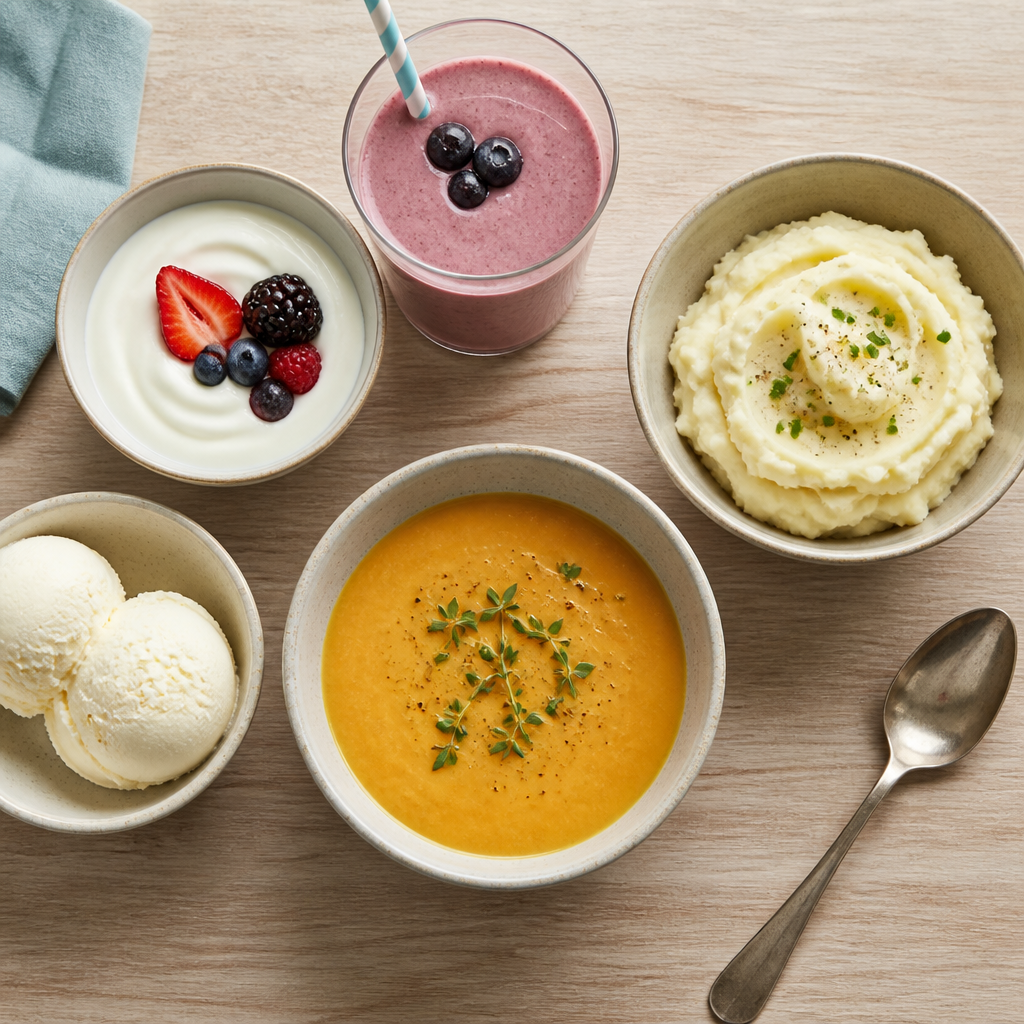
- Cold, smooth foods are ideal. Think yoghurt, smooth ice cream, custard, mousse and cold smoothies (eaten with a spoon — not a straw).
- Room-temperature or cool liquids — water, milk, meal replacement drinks, cold soup.
- Mashed banana or avocado — soft enough to require virtually no chewing.
- Protein shakes — an easy way to get nutrition when eating feels like too much effort. Pour them into a cup and sip gently.
Important Rules for Day 1
- Do not use a straw. The sucking motion can dislodge the blood clots and cause dry socket. This is one of the most important rules of wisdom teeth recovery.
- Do not eat anything hot. Heat increases blood flow to the area and can promote bleeding. Stick to cold or room-temperature foods.
- Do not chew near the extraction sites. If you need to chew at all, use the front teeth or the opposite side of your mouth.
- Eat slowly and carefully. Your mouth will be numb, so be careful not to bite your cheek, tongue or lip without realising it.
A Note About Numbness
The local anaesthetic we use at Compass Dental (often combined with happy gas for comfort) will keep your mouth numb for two to four hours after the procedure. Wait until the numbness wears off before attempting to eat anything, as you risk accidentally biting yourself while you cannot feel your mouth.
Days 2–3: Easing Into Soft Foods
By the second and third day, the initial bleeding should have stopped and the blood clots are becoming more established. You are still in the early stages of healing, so soft foods remain essential, but you can start to introduce a little more variety.
What to Eat
- Warm (not hot) soups — Smooth, blended soups are excellent. Pumpkin soup, potato and leek, creamy tomato and broth-based soups are all good options. Ensure there are no chunky pieces that could get lodged in the extraction sites.
- Scrambled eggs — Soft, fluffy scrambled eggs are a fantastic source of protein and easy to eat.
- Mashed potato — With butter, gravy or cheese for extra flavour and calories.
- Porridge or smooth oatmeal — Made with milk for added protein. Let it cool to a warm (not hot) temperature.
- Smoothies — Blend soft fruit (banana, mango, berries) with yoghurt and milk. Remember: no straws. Eat with a spoon or sip gently from a cup.
- Hummus — Smooth and packed with protein.
- Soft pasta — Very well-cooked pasta with a smooth sauce (no chunky meat sauce). Small shapes like risoni or orzo work well.
- Ripe, soft fruit — Banana, ripe pear, peeled peach segments, watermelon.
What to Avoid on Days 2–3
- Anything crunchy, crispy or hard (chips, crackers, nuts, toast, raw vegetables).
- Spicy foods — they can irritate the extraction sites and cause discomfort.
- Acidic foods — citrus fruits, tomato-heavy sauces and vinegar-based dressings can sting.
- Seeds and small grains — quinoa, chia seeds, sesame seeds and similar foods can become trapped in the sockets.
- Alcohol — it can interfere with healing and interact with pain medication.
Days 4–7: Gradually Expanding Your Diet
By the end of the first week, healing is well underway. The extraction sites are starting to close over with new tissue, though they will still be tender and sensitive. You can begin to introduce more variety, but continue to favour softer options.
What to Eat
- Soft-cooked vegetables — Steamed broccoli, carrots, sweet potato, zucchini — cooked until they are soft enough to mash with a fork.
- Fish — Flaky, soft white fish or salmon. Baked or steamed rather than crumbed or fried.
- Soft rice — Well-cooked rice with curry sauce, stew or casserole.
- Minced meat dishes — Bolognese, shepherd’s pie, soft meatballs, slow-cooked shredded meat.
- Pancakes and soft bread — Plain pancakes, soft white bread (no crusty sourdough yet), pikelets.
- Soft cheese — Brie, camembert, cream cheese, cottage cheese.
- Cooked fruit — Stewed apple, baked pear, tinned peaches.
- Mac and cheese — A crowd favourite during recovery for good reason.
- Tofu — Silken or soft tofu in soups, stir-fries (with a soft sauce) or on its own.
What to Still Avoid on Days 4–7
- Hard, crunchy foods (nuts, popcorn, chips, raw carrot sticks, crusty bread).
- Chewy foods (steak, jerky, tough cuts of meat, chewy lollies).
- Very small, hard foods that can lodge in the healing sockets (seeds, rice that is not well-cooked, popcorn kernels).
- Spicy and very acidic foods if they still cause discomfort.
Week 2 and Beyond: Returning to Normal Eating
Most patients are feeling significantly better by the start of the second week. The extraction sites are well on their way to healing, and you should be able to eat most of your normal diet with some common-sense modifications.
What You Can Reintroduce
- Most cooked meats — Chicken, pork, beef (cut into small pieces and chew carefully).
- Salads — Soft salads without hard croutons or tough raw vegetables.
- Sandwiches — Soft bread with your preferred fillings.
- Most fruits — Including firmer varieties like apple (cut into small pieces).
- Most cooked grains — Rice, couscous, pasta of all shapes.
When to Hold Off a Little Longer
- Very hard or crunchy foods — Nuts, hard lollies, ice cubes, hard pretzels. Wait until the three-week mark or until you feel comfortable.
- Chewy or sticky foods — Caramel, toffee, chewing gum. These can stick to healing tissue and cause discomfort.
- Foods that require wide opening — Burgers, large sandwiches, whole apples. The jaw muscles and joint may still be stiff.
Listen to Your Body
Everyone heals at a different pace. If something hurts to eat, stop and try again in a few days. There is no prize for rushing back to your normal diet — patience now pays off with a smoother recovery.
Hydration: An Often-Overlooked Priority
Staying well hydrated is just as important as eating the right foods. Adequate hydration supports healing, helps flush away bacteria and keeps your energy levels up — especially important in Darwin’s tropical climate, where you may lose more fluids through perspiration.
Hydration Tips
- Drink plenty of water throughout the day. Aim for at least 2 litres, more if it is a hot day.
- Sip gently rather than gulping or using straws.
- Coconut water is a good option — it is hydrating, gentle on the mouth and contains electrolytes.
- Herbal teas (lukewarm, not hot) such as chamomile can be soothing.
- Avoid alcohol for at least the first week, and longer if you are still taking pain medication.
- Limit caffeine — while a cup of coffee is fine from day two onwards (once it has cooled to a comfortable temperature), excessive caffeine can contribute to dehydration.
- Avoid fizzy drinks in the first few days — the carbonation can irritate the extraction sites.
Nutrition Tips for Faster Healing
What you eat is not just about comfort — it can actively support your recovery. Here are some nutrients to prioritise:
Protein
Protein is essential for tissue repair. Good soft-food sources include eggs, yoghurt, smooth peanut butter, soft fish, tofu, protein shakes and milk.
Vitamin C
Vitamin C supports immune function and wound healing. Get it from smoothies made with mango, strawberries or kiwi fruit, or from warm (not hot) soups with capsicum or broccoli.
Vitamin A
Important for tissue repair and immune health. Found in sweet potato, pumpkin, carrots (cooked soft) and eggs.
Zinc
Zinc supports immune function and wound healing. Found in eggs, yoghurt, soft-cooked meat, chickpeas (hummus) and pumpkin seeds (blended into a smoothie — do not eat them whole).
Omega-3 Fatty Acids
Anti-inflammatory and beneficial for healing. Found in salmon, avocado and chia seeds (blended smooth, not whole).
What Happens If Food Gets Stuck in the Socket?
This is a common concern, and it does happen. Small particles of food can find their way into the extraction site, particularly during the first week.
What to Do
- Do not poke at it with your tongue, fingers, toothpick or any other object.
- Gently rinse with warm saltwater (half a teaspoon of salt in a glass of warm water). Let the water flow gently over the area — do not swish vigorously.
- Use a plastic syringe if your dentist has provided one. From about day five onwards, you can gently irrigate the socket with warm saltwater using a curved-tip syringe. Your dentist will show you how to do this.
- Do not panic. A small piece of food in the socket is unlikely to cause a problem as long as you keep the area clean with gentle rinsing.
If you are concerned that something is lodged in the socket and you cannot remove it with gentle rinsing, contact us and we can help.
Common Eating Mistakes to Avoid
Over the years, we have seen a few common mistakes that can slow recovery:
- Using straws — It bears repeating. The suction can dislodge blood clots and lead to dry socket. No straws for at least a week.
- Eating hot food too soon — Hot food increases blood flow and can restart bleeding. Stick to cold or lukewarm foods on day one.
- Returning to hard foods too quickly — It is tempting to eat normally as soon as the pain eases, but the extraction sites are still healing beneath the surface. Give it time.
- Not eating enough — Some patients are so worried about eating that they barely eat at all. Your body needs fuel to heal. If you are struggling, try protein-rich drinks or meal replacement shakes.
- Skipping hydration — Particularly relevant in Darwin’s heat. Dehydration slows healing and can make you feel considerably worse.
A Sample Meal Plan for Your First Week
Here is a simple meal plan to give you some ideas:
Day 1
- Breakfast: Cold yoghurt with mashed banana
- Lunch: Cold pumpkin soup, custard
- Dinner: Smooth mashed potato, cold smoothie (no straw)
- Snacks: Ice cream, protein shake
Days 2–3
- Breakfast: Warm porridge with honey, scrambled eggs
- Lunch: Warm potato and leek soup, hummus with soft bread
- Dinner: Soft pasta with a smooth cheese sauce, stewed apple
- Snacks: Yoghurt, ripe banana, mousse
Days 4–7
- Breakfast: Scrambled eggs on soft toast, pancakes
- Lunch: Soft fish with mashed sweet potato, warm soup
- Dinner: Bolognese with well-cooked pasta, soft-cooked vegetables
- Snacks: Soft cheese and crackers (soft crackers only), smoothie, fruit
Week 2
- Gradually return to your normal diet, starting with softer versions of your favourite meals and working up to harder, crunchier foods as comfort allows.
Frequently Asked Questions
When can I eat solid food after wisdom teeth removal?
You can begin eating soft solid foods from day two onwards — think scrambled eggs, mashed potato and well-cooked pasta. Most patients can eat a fairly normal diet by the end of the second week, though very hard or crunchy foods are best avoided until the three-week mark.
Can I eat rice after wisdom teeth removal?
Yes, but wait until at least day four and make sure the rice is well-cooked and soft. Undercooked or firm rice grains can become lodged in the extraction sites. Risotto is a great option.
When can I eat spicy food after wisdom teeth removal?
Most patients can tolerate mild spice from about day four or five, but everyone is different. If spicy food causes stinging or discomfort at the extraction sites, hold off for a few more days. Listen to your body.
Can I drink coffee after wisdom teeth removal?
You can have lukewarm coffee from day two onwards, but avoid anything very hot for the first few days. Hot beverages can increase blood flow to the extraction site and promote bleeding. Also avoid excessive caffeine, which can contribute to dehydration.
Why can’t I use a straw?
The suction created by drawing liquid through a straw can dislodge the blood clots that form in the extraction sockets. These blood clots are essential for healing — without them, you may develop dry socket, a painful complication that delays recovery.
What if I accidentally eat something hard?
Do not panic. If you have bitten into something hard and it caused a sharp pain at the extraction site, rinse gently with warm saltwater and monitor the area. If you notice increased pain, bleeding or signs of dry socket over the following days, contact us.
I’m not hungry at all after my extraction. Is that normal?
Yes, it is very common to have a reduced appetite for the first day or two. Pain, swelling, medications and general fatigue can all suppress your appetite. Try to eat small amounts regularly even if you are not hungry — your body needs fuel to heal. Protein shakes and smoothies (no straw) are a good option when you do not feel like eating.
How long until I can eat completely normally?
Most patients are eating their full normal diet within two to three weeks. However, the extraction sites can take several weeks to fully close over, so you may notice food occasionally getting trapped in the sockets for a month or more. Gentle rinsing after meals will help keep the area clean.
I live in a remote part of the NT and I’m worried about managing my diet during recovery. Any tips?
Stock up on shelf-stable soft foods before your trip to Darwin for the extraction — instant mashed potato, tinned soup, UHT custard, protein powder and tinned fruit are all easy to transport. If you are staying in Darwin for a few days after the procedure, most supermarkets and convenience stores carry everything you need. Our team at Compass Dental can provide a printed aftercare and food guide to take with you.
Need your wisdom teeth removed? At Compass Dental, Dr Thien Pham and our team make the experience as smooth as possible — from the procedure itself (using local anaesthetic and happy gas for your comfort) to your recovery. Book an appointment today.


