
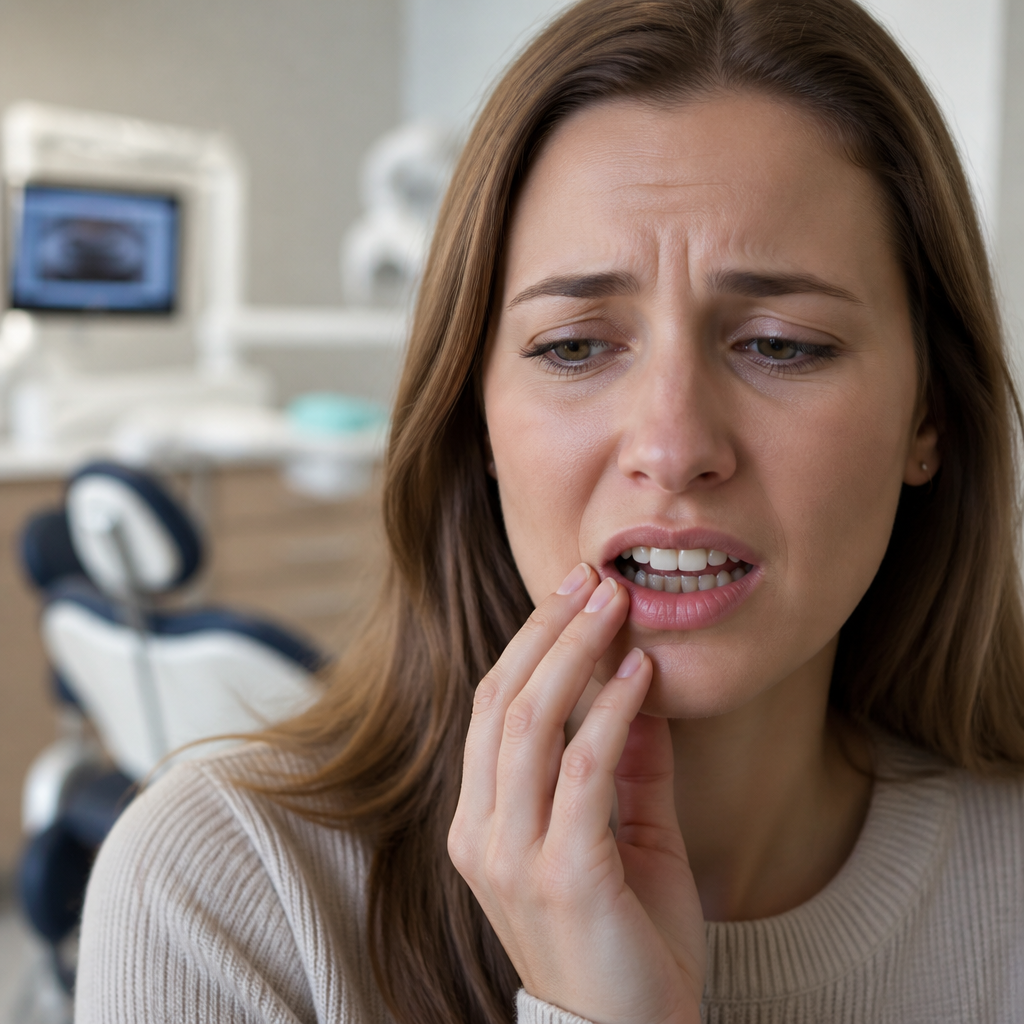
Broken or Cracked Tooth — Emergency First Aid and Treatment Guide
Biting into something hard, copping an elbow at footy training, taking a fall off a bicycle, or simply having a weakened tooth give way during a normal meal — a broken or cracked tooth can happen suddenly and unexpectedly. The experience can be alarming, especially if there is pain, bleeding, or a visible piece of tooth missing.
The good news is that most broken and cracked teeth can be treated successfully, especially with prompt care. The key is understanding what type of fracture you are dealing with, knowing the right first aid, and getting to your dentist at the appropriate time.
At Compass Dental in Darwin, we see broken and cracked teeth regularly — it is one of the most common dental emergencies. Dr Thien Pham and our team have been managing dental trauma for over 10 years, and we prioritise patients with broken teeth to ensure they receive timely care.
Types of Tooth Fractures
Not all breaks are created equal. The type and severity of the fracture determines how urgent the situation is and what treatment is needed.
Minor Chip (Enamel Only)
A small chip that affects only the outer enamel layer of the tooth. There is typically no pain, no sensitivity, and no bleeding. The chip may leave a slightly rough or sharp edge.
Urgency: Low. This can usually wait for a routine appointment within a week or two.
Common causes: Biting on a hard object (ice, olive pit, popcorn kernel), minor impact, or normal wear on a tooth with existing weak points.
Cracked Tooth (Craze Lines to Deep Cracks)
A crack in a tooth can range from a superficial craze line (a hairline crack in the enamel that causes no symptoms) to a deep fracture that extends toward or into the nerve.
Symptoms of a significant crack:
- Sharp pain when biting down, especially when you release the bite
- Sensitivity to hot, cold, or sweet foods and drinks
- Intermittent pain that comes and goes
- Pain that is difficult to localise — you might not be sure which tooth is causing it
Urgency: Moderate to high, depending on symptoms. If you have persistent pain or sensitivity, see your dentist within 24 hours. A crack can extend further at any time, potentially splitting the tooth.
Common causes: Biting on hard foods, grinding or clenching (bruxism), large existing fillings that weaken the tooth structure, trauma, or sudden temperature changes (such as eating something very hot followed immediately by something very cold).
Broken Cusp
A cusp is one of the pointed sections on the biting surface of a back tooth (premolar or molar). When a cusp breaks off, it usually happens around a large filling. It may or may not cause pain — it depends on whether the break extends near the nerve.
Urgency: Moderate. See your dentist within a day or two. If there is significant pain, seek same-day care.
Common causes: Weakened tooth structure around a large filling, biting on hard foods, grinding.
Serious Break (Exposing the Nerve)
A significant fracture that breaks away a large portion of the tooth and exposes the pink or red pulp tissue (the nerve and blood supply) inside. This is usually very painful and may bleed.
Urgency: High — this is a dental emergency. See your dentist the same day.
Common causes: Trauma (sports, falls, accidents), biting on an unexpectedly hard object, or a weakened tooth that finally gives way.
Split Tooth
A split tooth has a crack that extends from the biting surface down toward the root, effectively dividing the tooth into two segments. The tooth may visibly separate. This is one of the most severe types of fracture.
Urgency: High — this is a dental emergency. The tooth may not be salvageable, but prompt assessment is essential.
Common causes: Long-standing untreated cracks that have gradually extended, or significant trauma.
Vertical Root Fracture
A crack that begins in the root of the tooth and extends upward. These are tricky because they often cause minimal symptoms initially — perhaps mild tenderness or a small infection around the root — and may go undetected for some time.
Urgency: Moderate. These fractures are often discovered during investigation of persistent, low-level symptoms. See your dentist for assessment.
Common causes: Previous root canal treatment (which can weaken the root over time), trauma, or excessive biting forces.
First Aid for a Broken or Cracked Tooth
Step 1: Rinse Your Mouth
Rinse gently with warm water to clean the area and remove any debris or loose fragments. If the broken piece is in your mouth, spit it out carefully — do not swallow it.
Step 2: Control Any Bleeding
If the break has caused bleeding, apply gentle but firm pressure with a clean piece of gauze, a damp tea bag, or a clean cloth. Hold it in place for 10 to 15 minutes. A damp black tea bag can be particularly effective, as the tannins in tea help promote blood clotting.
Step 3: Reduce Swelling
Apply a cold compress to the outside of your cheek on the affected side. Use an ice pack wrapped in a thin towel, a bag of frozen vegetables, or a cold, damp cloth. Apply for 15 minutes on, 15 minutes off.
Step 4: Manage Pain
Take over-the-counter pain relief:
- Ibuprofen (Nurofen) is the best first choice for dental pain as it tackles both pain and inflammation
- Paracetamol (Panadol) can be taken alongside ibuprofen for additional relief
- Follow the dosage instructions on the packaging
- Do not place aspirin directly on the gum
Step 5: Protect the Tooth and Your Mouth
If the break has left a sharp or jagged edge that is cutting your tongue, cheek, or lip:
- Cover it with dental wax (available from pharmacies)
- In a pinch, a small piece of sugar-free chewing gum can be moulded over the sharp edge
- Folded gauze placed over the area can also provide temporary protection
Step 6: Save the Broken Piece
If you have the piece that has broken off, store it in a small container of milk or water and bring it to your dental appointment. In some cases, it can be bonded back onto the tooth.
Step 7: Eat Carefully
Until you see your dentist:
- Avoid chewing on the affected side
- Stick to soft foods
- Avoid very hot, very cold, or sweet foods and drinks, which may trigger pain if the nerve is exposed or the dentine layer is compromised
- Do not bite into hard or crunchy foods
Step 8: Call Compass Dental
Phone us and describe what has happened. We will advise you on the urgency and find you an appropriate appointment time. For significant breaks with pain, we will see you the same day.
When Is a Broken Tooth an Emergency?
Seek Same-Day Emergency Care If:
- The tooth is severely broken with visible pink or red tissue (exposed nerve)
- There is significant, uncontrolled pain that is not easing with over-the-counter medication
- There is heavy bleeding that is not stopping with pressure
- A large portion of the tooth is missing
- The tooth is loose or feels like it is about to come out
- There is swelling developing around the tooth
- The break was caused by a significant impact (fall, sport, accident) and there may be other injuries
See Your Dentist Within 24 to 48 Hours If:
- You have a moderate break with a sharp edge but manageable pain
- A cusp has broken off and the tooth is sensitive but not agonising
- You can feel a crack and have intermittent sharp pain when biting
- The break happened around an existing filling
Book a Routine Appointment If:
- There is a minor cosmetic chip with no pain or sensitivity
- A very small piece of enamel has flaked off
- You have noticed craze lines (fine surface cracks) but have no symptoms
Treatment Options at Compass Dental
The treatment for a broken or cracked tooth depends on the type and severity of the fracture, the location of the tooth, and the condition of the remaining tooth structure.
Dental Bonding (Composite Resin)
For minor chips and small breaks, Dr Pham can repair the tooth with tooth-coloured composite resin. This is a straightforward procedure that can usually be completed in a single appointment. The resin is shaped and polished to match the natural tooth, restoring both appearance and function.
Dental Veneer
For front teeth with more significant chips or cosmetic damage, a porcelain veneer — a thin shell of ceramic bonded to the front surface of the tooth — can provide a durable and natural-looking repair.
Dental Crown
For larger breaks, broken cusps, or cracked teeth where significant tooth structure has been lost, a dental crown (cap) is often the best option. A crown covers the entire visible portion of the tooth, protecting it from further damage and restoring its shape and strength.
At Compass Dental, we can often prepare the tooth and fit a temporary crown on the same day as your emergency visit, with the permanent crown placed at a follow-up appointment once the dental laboratory has fabricated it.
Root Canal Treatment
If the fracture extends into the pulp (nerve) of the tooth, root canal treatment is usually needed to remove the damaged or infected nerve tissue, disinfect the canals, and seal the tooth. A crown is then typically placed over the root-canal-treated tooth to protect it.
Root canal treatment has an unfairly negative reputation. In reality, modern root canal treatment is performed under local anaesthetic and is no more uncomfortable than having a filling placed. At Compass Dental, we also offer happy gas (nitrous oxide) sedation for patients who are anxious about the procedure.
Extraction
In some cases, a tooth is too severely fractured to be saved — for instance, a split tooth where the crack extends well below the gum line, or a vertical root fracture. In these situations, extraction is the most appropriate treatment.
If extraction is needed, Dr Pham will discuss replacement options with you, which may include a dental implant, bridge, or partial denture, depending on the location and your individual circumstances.
Splinting
If a tooth has been loosened but not knocked out by the trauma that caused the fracture, it may need to be splinted (attached to the neighbouring teeth with a flexible wire) to hold it stable while it heals.
Why You Should Not Ignore a Cracked Tooth
It can be tempting to ignore a cracked tooth, especially if the pain is intermittent or manageable. But there are important reasons to get it assessed promptly:
Cracks Can Extend
A crack that is currently small and treatable with a crown can extend further at any time — while you are eating, sleeping, or simply going about your day. Once a crack extends deep enough to split the tooth or reach the root, the tooth may become unsaveable.
Bacteria Can Enter
A crack provides a pathway for bacteria to enter the inner layers of the tooth, potentially reaching the nerve and causing infection. What starts as a cracked tooth can become an abscess.
Early Treatment Is Simpler and Less Costly
A crown placed on a cracked tooth before the crack extends is far simpler (and less expensive) than root canal treatment plus a crown, or an extraction followed by an implant. Early intervention nearly always leads to better outcomes and lower costs.
Pain Often Gets Worse
Cracked tooth pain tends to worsen over time, not improve. The sooner you address it, the sooner you are out of discomfort.
Prevention Tips — Protecting Your Teeth from Fractures
Wear a Custom Mouthguard
If you play contact or collision sports — AFL, rugby, basketball, martial arts, hockey, boxing, cricket — a custom-fitted mouthguard made by your dentist is the best investment you can make in protecting your teeth. Off-the-shelf boil-and-bite mouthguards offer significantly less protection and are less comfortable, meaning you are less likely to wear them consistently.
Get a Night Guard If You Grind
Grinding and clenching place enormous forces on your teeth — far more than normal chewing. Over time, this weakens teeth and makes them prone to fractures. A custom night guard worn during sleep absorbs and distributes these forces, protecting your teeth.
Avoid Using Your Teeth as Tools
Your teeth are designed for chewing food. Opening bottles, tearing packaging, biting nails, holding pins, or cracking nuts with your teeth all dramatically increase the risk of fractures.
Be Cautious with Hard Foods
Ice, unpopped popcorn kernels, olive pits, hard lollies, bone fragments in meat, and crusty bread can all crack teeth. Be mindful of what you are biting into, and chew hard foods with care.
Replace Large, Old Fillings
Large amalgam (silver) fillings that have been in place for many years can weaken the surrounding tooth structure over time. Your dentist can monitor these fillings and recommend replacing them with a crown before the tooth fractures. Regular check-ups are essential for catching these issues early.
Maintain Good Oral Health
Teeth weakened by decay are far more susceptible to fracture than healthy teeth. Brush twice a day, floss daily, limit sugary foods, and attend regular dental check-ups and cleans.
Frequently Asked Questions
Can a cracked tooth heal on its own?
No. Unlike bones, teeth cannot heal or repair themselves. A crack in a tooth will not mend — it will either stay the same or get worse over time. Professional treatment is needed to protect the tooth from further damage.
Is it normal for a cracked tooth pain to come and go?
Yes, this is actually a classic sign of a cracked tooth. The pain is often triggered by biting down and is most noticeable when you release the bite. It may not hurt all the time, but this intermittent pattern is a strong indicator of a crack and warrants assessment.
How do I know if the nerve is exposed?
If you can see pink or red tissue inside the broken tooth, the nerve (pulp) is likely exposed. The tooth will probably be very sensitive to air, temperature, and touch. This is a dental emergency — see your dentist the same day.
Can I superglue a broken tooth back together?
No. Superglue is toxic, not food-safe, and will not create a proper bond. It can also irritate the gum tissue and make professional repair more difficult. Use temporary dental cement from the pharmacy instead, or simply cover sharp edges with dental wax.
Will I need a crown for every broken tooth?
Not necessarily. Small chips can often be repaired with bonding (composite resin). However, larger breaks, cracked teeth, and teeth that have lost a cusp will usually need a crown to provide adequate protection. Your dentist will recommend the most appropriate treatment for your specific situation.
How much does it cost to fix a broken tooth?
The cost depends on the treatment needed. Simple bonding is the least expensive, while crowns and root canal treatments cost more. At Compass Dental, we will explain the costs and your options before beginning treatment. We accept private health insurance and offer payment options.
Do Not Wait — Contact Compass Dental
If you have broken, cracked, or chipped a tooth, the sooner you seek treatment, the better the outcome. At Compass Dental, we prioritise patients with dental emergencies and will make room to see you.
Dr Thien Pham and our team have over a decade of experience managing dental fractures and trauma in Darwin. We will assess the damage, relieve your pain, and develop a treatment plan to restore your tooth.
Call Compass Dental now or book an emergency appointment online.
If you have sustained a significant facial injury, suspect a jaw fracture, or have uncontrolled bleeding, call 000 or go to the Royal Darwin Hospital emergency department.


