
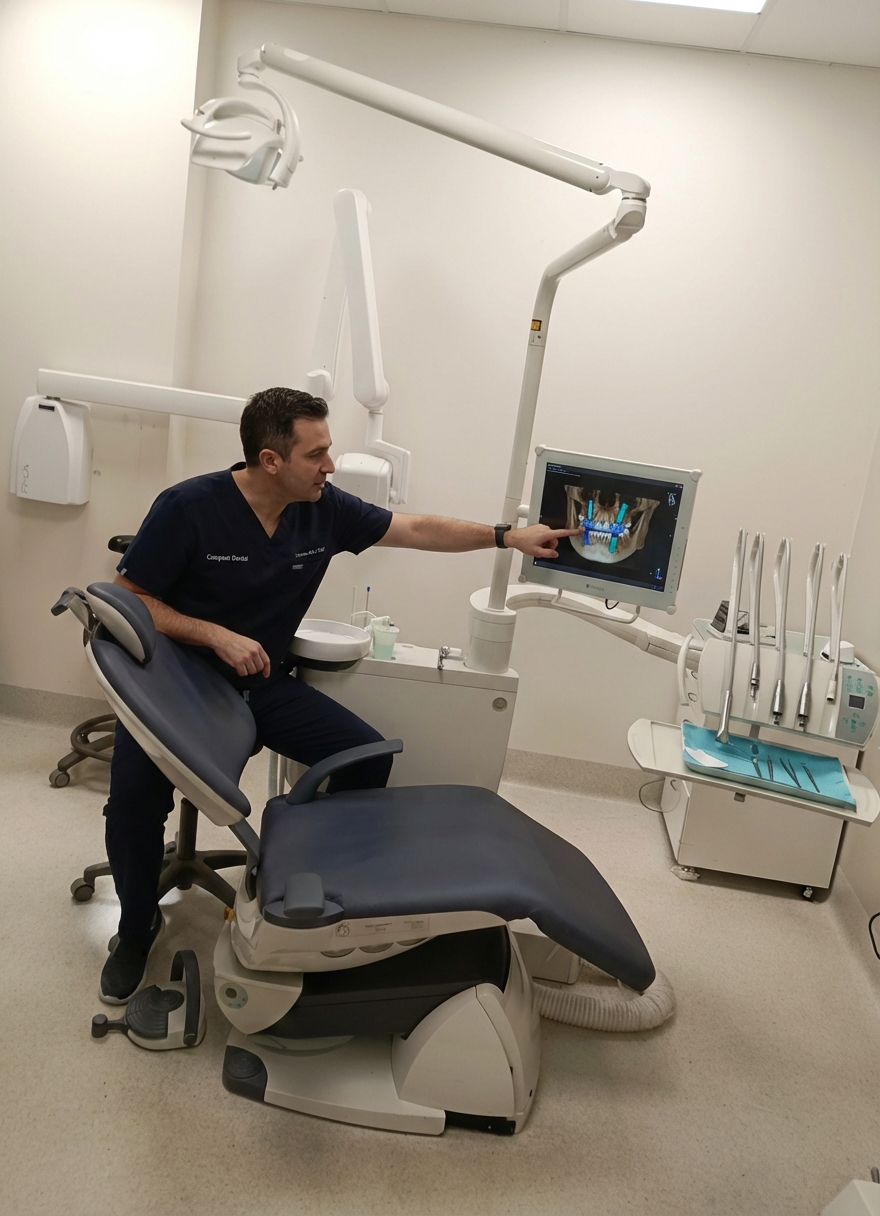
Computer-Guided Dental Implants (MIS System)
Precise implant placement using computer-guided technology for more accurate results, faster healing, and less invasive surgery.
What You Need to Know
Computer-guided implant placement uses your 3D CBCT scan to plan the exact position of each implant before surgery begins. Using the MIS implant system, we achieve a level of precision that simply isn’t possible with freehand placement.
Why Patients Choose Us
Computer-Guided Precision
Your implant is planned digitally on a 3D model of your jaw. We know the exact angle, depth, and position before we even start — no guesswork.
Less Invasive
Guided surgery often requires smaller incisions than traditional implant placement. Less cutting means less swelling, less discomfort, and faster recovery.
MIS Implant System
The MIS system is used worldwide and known for its reliability, versatility, and excellent long-term outcomes across different clinical situations.
Faster Healing
The precision of guided placement minimises tissue trauma, which means your body heals faster and you’re back to normal sooner.
Predictable Results
When you can plan every detail digitally before surgery, the results are more predictable. Fewer surprises, better outcomes.
Common Questions About Computer-Guided Implants
What makes computer-guided implants different?
Computer-guided surgery uses 3D CT scans and digital planning to map the exact position, angle, and depth of each implant before surgery. This means greater precision, fewer surprises, and often faster healing.
Is computer-guided surgery more accurate?
Yes — studies show computer-guided placement is significantly more accurate than freehand placement. The implant goes exactly where planned, which is especially important near nerves and sinuses.
Does it cost more than standard implants?
The implant cost is similar. The digital planning adds a small amount to the overall fee, but the improved accuracy often means fewer complications and faster healing, which can save costs in the long run.
How does the MIS implant system work?
MIS (Make It Simple) implants are designed with a unique triangular connection that provides excellent stability and precise fit. Combined with computer-guided planning, they offer predictable, high-quality results.
Will I need a CT scan?
Yes — a low-radiation 3D cone-beam CT scan is taken to map your jawbone in detail. This is done in our practice and takes about 15 seconds. It gives us the information needed to plan your implant precisely.
Can computer-guided surgery be done under sedation?
Absolutely. We offer happy gas (nitrous oxide) to help you relax during the procedure, and can arrange a referral for IV sedation if needed. The guided approach often makes the surgery quicker, which means less time in the chair.
How long does the guided surgery take?
Because everything is pre-planned digitally, the actual surgery is often faster than traditional freehand placement. A single implant can be placed in as little as 20-30 minutes.
Is computer-guided surgery suitable for All-on-4?
Yes — in fact, computer-guided planning is especially valuable for full-arch cases like All-on-4, where precise angulation of multiple implants is critical.
What happens during the digital planning phase?
We take a 3D scan, create a virtual model of your jaw, and digitally plan the optimal implant position. A surgical guide is then 3D-printed that snaps onto your teeth and guides the drill to the exact planned position.
Are there any risks with computer-guided implants?
Computer-guided surgery actually reduces risks compared to freehand placement. The precise planning helps avoid nerves and blood vessels, and the guided approach means less tissue disruption and faster healing.
Interested in Computer-Guided Implants?
Book a consultation and we’ll explain whether guided placement is the best approach for your situation.


